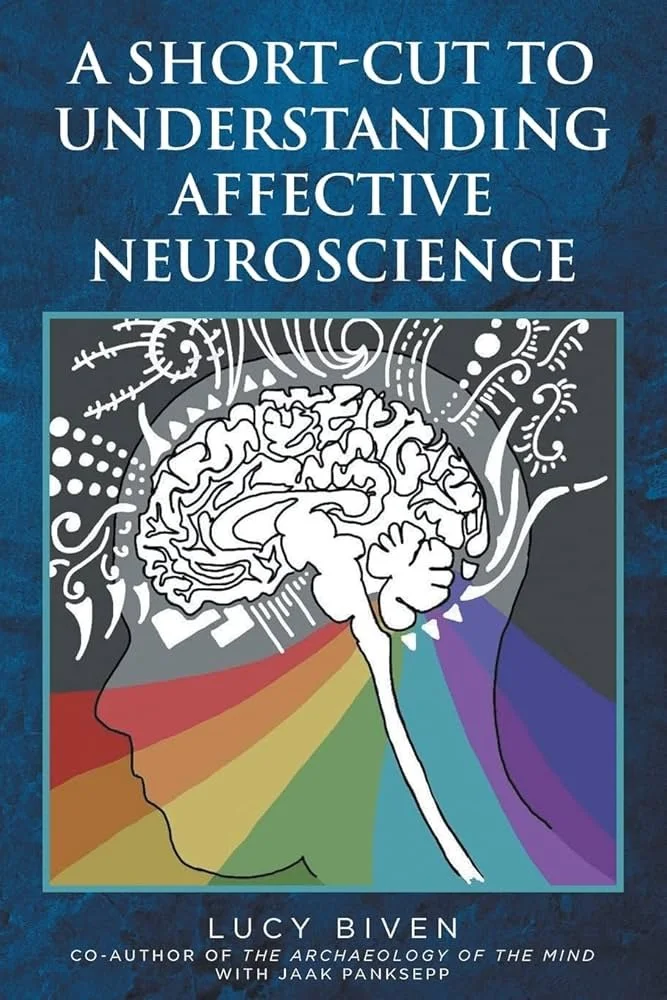
Book Summary and Review: Shortcut to Understanding Affective Neuroscience by Lucy Biven
Get Started and Succeed with Love, Today.
In an era where mental health conversations are expanding rapidly, Shortcut to Understanding Affective Neuroscience offers a clear and accessible introduction to one of the most important fields in modern psychology. Lucy Biven presents complex neuroscientific concepts in a readable format, making the science of emotion understandable for coaches, therapists, educators, and anyone interested in human behavior.
Overview of the Book
The central premise of the book is simple but powerful: to understand human behavior, we must first understand the brain’s emotional operating systems. Rather than focusing exclusively on cognition, diagnosis, or surface-level symptoms, Biven guides readers into the foundational emotional circuits that drive motivation, fear, attachment, anger, play, care, and seeking.
Drawing heavily from the work of pioneers in affective neuroscience, the book explains how subcortical brain systems shape our personalities, relationships, and reactions long before conscious thought becomes involved. Biven emphasizes that emotions are not weaknesses or secondary experiences - they are primary organizing forces of the mind.
The Core Emotional Systems Explained
One of the book’s strengths is its structured explanation of the primary emotional systems often identified in affective neuroscience:
The SEEKING system (motivation, curiosity, enthusiasm)
The FEAR system (threat detection, fears)
The RAGE system (frustration, boundary defense, attack)
The CARE system (nurturance, bonding, maternity)
The PANIC/GRIEF system (attachment distress)
The PLAY system (joyful social engagement)
The LUST system (reproductive drive)
Biven explains how these systems evolved for survival but now shape modern relationships, workplace performance, parenting styles, and even mental health disorders.
Importantly, she clarifies that psychological symptoms often arise from dysregulated or overstimulated emotional systems rather than “character flaws.” For example, chronic anxiety may reflect an overactive fear system, while depression can involve a suppressed seeking system, combined with an overstimulated panic/grief system and attachment distress.
Why This Book Matters for Coaching and Psychology
A key theme throughout the book is that traditional psychology has often overemphasized cognition - thoughts, beliefs, interpretations - while underestimating the biological foundation of emotion. Biven argues that no coaching or therapeutic approach can be fully effective without understanding emotional circuitry.
For coaches and mentors, this is particularly relevant. Skill-based or goal-based interventions may fail if a client’s emotional systems are dysregulated. You cannot build ambition if the seeking system is underdeveloped. You cannot foster intimacy if the panic/grief system and so attachment circuitry is overwhelmed by the fear system.
By grounding practice in affective neuroscience, professionals gain a map of the emotional brain that explains why clients react the way they do - and a clearer roadmap of how to best help them.
The Writing Style and Accessibility
Despite the scientific content, the book is written in accessible language. Biven avoids overwhelming readers with technical jargon. Instead, she uses relatable examples from relationships, parenting, and daily life to illustrate how these brain systems operate.
The structure flows logically, building from evolutionary foundations to applied psychological insights. Readers unfamiliar with neuroscience can still follow the arguments, while professionals will appreciate the conceptual clarity.
Strengths of the Book
1. Clarity of explanation - Complex neuroscience is simplified without being distorted.
2. Practical application - The content directly connects to coaching, therapy, psychology and relational work.
3. Integration of science and compassion - The book reinforces that understanding brain systems and chemistry increases empathy.
4. Reframing of mental health - Symptoms are explained as dysregulated or overstimulated systems, rather than personal defects.
The book also bridges the gap between neuroscience and human development, helping readers see how early childhood experiences shape emotional circuitry across the lifespan.
This book serves as a brilliant conceptual foundation of affective neuroscience, rather than a dense academic text. This accessibility is its strength, particularly for professionals seeking a practical neuroscience understanding, rather than laboratory-level detail, which rarely helps anyone.
Shortcut to Understanding Affective Neuroscience succeeds in its mission: it provides a clear, digestible entry point into the emotional brain. It challenges the dominance of purely cognitive models in psychology, and highlights the necessity of working with emotional systems directly.
For coaches, therapists, psychologists, psychiatrists, educators, and leaders, this book offers a framework that can transform how human behavior is understood. Instead of asking, “What is wrong with this person?” readers begin asking, “What has happened to this person, and which emotional systems are overactivated or dysregulated?”
In today’s mental health landscape - where diagnoses are common but deep understanding is often missing - this book is both timely and essential.
If you are interested in emotional regulation, attachment science, trauma recovery, coaching effectiveness, or neuroscience, this book is a powerful asset. It reminds us that beneath every thought is an emotion, and a brain system designed for survival and connection.
Understanding affective neuroscience may be the true shortcut to understanding ourselves.
At Succeed with Love, at www.loveshiddenpolicy.com it is our mission to help couples to succeed with love. Please reach out to us if you need guidance on doing better in your loving relationship, and we will help you to succeed with love.