
Loving Relationship Articles

Why Succeeding with Love Is More Important Than Ever to Rebuild Society
Rebuilding Society Begins with How We Love
In today's increasingly complex world, succeeding with love is more important than ever. Across families, relationships, workplaces, and communities, people are navigating growing pressures, technological change, social isolation, financial uncertainty, and increasing demands on their time and attention. While governments, institutions, and technology can help address many societal challenges, rebuilding a healthier society also requires something fundamental: our ability to build and maintain loving, respectful, and supportive human relationships.

How the Social Cognition or Mentalizing System Functions in a Loving Relationship
Many people searching online ask questions such as: How do partners understand each other’s thoughts and feelings? or Why do some couples seem naturally attuned to each other? The answer lies in a powerful psychological capacity known as the social cognition or mentalizing system. This system allows individuals to interpret the thoughts, intentions, emotions, and perspectives of others - an ability that is essential for healthy, loving relationships.

Who Do We Recommend as an LMFT in Palm Beach, South Florida?
At Loves Hidden Policy or Succeed with Love, we believe great coaching knows its boundaries - and knowing when to refer a client to a licensed therapist is one of the most important skills a professional coach can have.

How the Emotional Regulation System Functions in a Loving Relationship
A common question people ask online is: How do couples manage emotions in a healthy loving relationship? Modern psychology shows that one of the most important processes in any loving partnership is the emotional regulation system. This system helps individuals manage feelings such as stress, anger, joy, fear, and affection so that relationships remain stable and supportive rather than reactive and chaotic.

How Memory Systems Function in a Loving Relationship
Many people searching online ask questions such as: How does memory affect loving relationships?, Why do couples remember events differently?, and Why do shared memories strengthen love? Modern neuroscience and psychology show that memory systems play a crucial role in how partners experience connection, trust, and emotional meaning within a loving relationship.
What is Neuroplastic Narrative?
The science of how your personal story rewires your brain - and why changing it can change everything.
If you have ever felt trapped by your own thoughts - replaying old failures, doubting your potential, or struggling to break patterns you know are holding you back - there is a neuroscience-backed reason why. And more importantly, there is a way out.

Analysis of Your Partner in a Long-Term Loving Relationship Is Often Felt Physiologically as Disrespect
Healthy long-term loving relationships depend on emotional safety, trust, and mutual respect. While many couples believe that carefully analyzing their partner will help solve relationship problems, constant analysis can have the opposite effect. When one partner repeatedly interprets, judges, diagnoses, or explains the other person's thoughts, motives, or behavior, it is often experienced physiologically as disrespect, rather than misunderstanding.

How Can Couples Succeed with Love?
Loving relationships begin with the fantasy bond stage, a term developed by Dr. Robert Firestone, to describe a romanticised connection between two people, which is often rooted in fantasy-based expectations, and not fully grounded in reality. It is a more accurate description of the first stage of the beginning of a healthy loving relationship, than the honeymoon period.

Childhood Survival Strategies: How Early Adaptation Shapes Adult Life, & Especially Loving Relationships
Childhood survival strategies are the biological and psychological adjustments a child makes to navigate their immediate environment, particularly when that environment is unpredictable, harsh, or traumatic (Csathó & Birkás, 2018). While these adaptations are essential for surviving childhood, they often persist into adulthood, influencing everything from emotional regulation, to dramatically affecting romantic, loving relationship satisfaction (Sun et al., 2021).

How the Caregiving or Nurture System Functions in a Loving Relationship
A common question people ask online is: What makes people care for each other in a loving relationship? Modern psychology suggests that love is not only emotional or romantic - it is also driven by biological systems in the brain. One of the most important of these systems is the caregiving or nurture system, which motivates people to protect, support, and emotionally respond to those they love.

How the Autonomic Nervous System (ANS) Interprets Information in a Loving Relationship
One of the most common questions people ask online is: How does the nervous system affect love and loving relationships? Modern neuroscience shows that the way partners experience love, safety, and connection is deeply influenced by the Autonomic Nervous System (ANS).

How the Threat or Fear System Becomes Activated in Loving Relationship Communication
Loving relationships are meant to feel safe, supportive, and emotionally secure. Yet even in strong partnerships, conversations can suddenly become tense, defensive, or emotionally overwhelming. This shift often happens because the threat or fear system in the brain becomes activated during communication. Understanding this biological process is essential for improving reducing conflict, and strengthening relationship security.

The Basic Neuroscience of the Emotional Regulation System
The emotion regulation system is one of the most important networks in the human brain. It allows us to manage emotions and feelings, respond appropriately to stress, and maintain balance in relationships and decision-making. Without the ability to effectively regulate emotions, people become reactive, overwhelmed, impulsive, or emotionally shut down.

The Executive Control System: The Brain’s Leadership and Decision-Making Network
The Executive Control System, often called the executive control network, is one of the most important systems in the human brain. It governs focus, decision-making, impulse control, planning, and goal-directed behavior. In simple terms, it acts as the brain’s leadership center. Without a strong executive control system, individuals struggle with distraction, emotional impulsivity, poor organization, and inconsistent performance.

Why Humanity Must Integrate the Heart and the Mind at This Vital Time
Humanity stands at a critical crossroads. Technology is accelerating, artificial intelligence is transforming industries, and information moves faster than ever before. Yet despite unprecedented intellectual advancement, many people feel disconnected, anxious, and divided. The challenge of our time is not a lack of intelligence - it is a lack of integration. To move forward wisely, humanity must integrate the heart and the mind.

Why It Is Not Smart to Continually Use Autopilot: Understanding the Default Mode Network (DMN) System in the Brain
The human brain is designed to switch between different networks depending on what we are doing. One of the most important of these is the Default Mode Network (DMN) system, often referred to as the brain’s “autopilot” system.
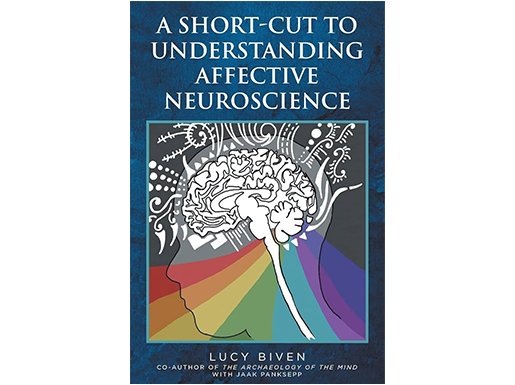
Book Summary and Review: Shortcut to Understanding Affective Neuroscience by Lucy Biven
In an era where mental health conversations are expanding rapidly, Shortcut to Understanding Affective Neuroscience offers a clear and accessible introduction to one of the most important fields in modern psychology. Lucy Biven presents complex neuroscientific concepts in a readable format, making the science of emotion understandable for coaches, therapists, educators, and anyone interested in human behavior.

Why Couples Coaching Is More Effective Than Couples Therapy for Growth-Oriented Relationships
Couples today are seeking faster, practical, and forward-focused solutions to relationship challenges. While traditional couples therapy has long been the standard approach for relational distress, couples coaching is increasingly viewed as more effective for growth-oriented partners who want clear strategies, measurable progress, and future-focused change. Understanding the differences between couples coaching and couples therapy helps explain why many couples prefer coaching in modern relationships.

Why Affective Neuroscience Must Become the Foundation of All Psychology-Based Approaches
Psychology has traditionally emphasized cognition - thoughts, beliefs, interpretations, and behavioral patterns. However, modern brain research increasingly shows that emotion comes first. Affective neuroscience, the study of the neural systems that generate emotion, reveals that primary emotional circuits shape perception, motivation, learning, and decision-making long before conscious reasoning takes place. For this reason, affective neuroscience must become the foundation of all psychology-based approaches.

How the Microbiome Becomes Regulated by Human Touch - Why Loving Relationships Are Essential for Human Health
The human microbiome - the vast ecosystem of bacteria, fungi, and microorganisms living primarily in the gut - plays a central role in digestion, immune regulation, mood stability, and even cognition. Emerging research in neuroscience, immunology, and microbiology shows that the microbiome is not regulated by diet alone. It is influenced by stress, social connection, and surprisingly, human touch. This helps explain why loving relationships are biologically essential for human health.